
"As the body senses that a bitter berry may be toxic, the inner response is to prepare for incoming toxicity. Our liver gets a message to clear what it’s holding, just in case we swallow the poison berry. Bitter instigates an internal cleanse..."

Now and then, when the mood hits and the produce comes in, I like to make some orange marmalade. It’s very simple, yet offers complex taste notes and specific health support. But how can I recommend a sweet thing like marmalade, which obviously would add to the sugar load that I normally advise so strongly against?
These days everyone seems to think in extremes, good or bad, healthy or deadly. Never eat this. Everyone needs to eat that. The truth is that we live in the difficult in-between. Difficult because it requires some sophistication of thought, of viewpoint. We are all exposed to a lot of dietary advice, and it tends to be extreme. Naturally, this leads to fads, as foods and supplements come in and out of favor. Add the personality of the internet, where everyone seems to shout, and we’re bouncing from one extreme to another. There are those who won’t touch anything out of their rule structure, while others don’t want to hear the word “healthy” and its “no-fun attitude”, shopping for food guided only by a childish pleasure principle.
The problem is that our tastes have been manipulated by an aggressive marketplace. The sweet taste, historically, used to be rare. And because rare, special. We had sweets for birthdays and holidays. Today, many people have sweets on their birthday, and the day before, day after, days after that, and so forth. Due to scarcity, excess sugar was of little concern.
The increase of cultural affluence coincided with the introduction of processed foods and an advertising campaign to liberate women from the kitchen. Each of those three currents had strong winds behind it (especially releasing women from long kitchen duty). But we have suffered enormously as a community from too much food, prepared and processed foods, and the lack of home cooking. We’ve gone too far, way too far; we’ve gone to an extreme.
As we realize that “all or nothing” is problematic, and as we commit to learning to live in the difficult in-between, we can attend to what’s needed: to learn to cook simple, ingredient-based meals that digest well and support real health, without breaking our budget or becoming kitchen servants. Easy food that is really good. That’s the secret.
And since the sweet taste is one of the extremes, it is something we need to figure out.
Sweet things taste good. We can see from a buried memory of living in the wild that the sweet taste was significant. Like the forest animals risking safety for food at the end of winter, there would be the urge to eat anything, but we know that many plants and berries are poisonous. Our instinctive taste sense tells us that while natural toxins are often bitter, the sweet taste usually signals food safety. Mother’s milk is sweet; sweet is the taste of foods that make us safe and help us grow. It’s natural to seek sweetness, especially for children, whose main job is to grow. Some adults, incidentally, feel that they have “grown” a bit too much. But as we are not in a natural world, and adding sugar or false sugars to foods strongly amplifies sales, we are swimming in excess. And that excess is not only in frequency of sugar, it is in the intensity, concentration, and ubiquity of the sweet taste. Many today feel that should foods be sweet and not at all bitter. Our intrinsic capacity to sense sweet (safe) and bitter (potentially toxic) has been manipulated by the food industry to an absurd degree. Our taste sense has lost its calibration.
A few more ideas are needed before we can consider marmalade with real thinking. When we commit to doing a good bit of our own cooking, and when we discover that it doesn’t take so much time after all, one of the things we need to do is to provide our own occasional sweet things. Otherwise, we may be cooking “healthy” at home and indulging in sweets or fried food when out. This is as common as it is unnecessary.
At some point we have to realize that the bitter taste has its place, with an important function. As the body senses that a bitter berry may be toxic, the inner response is to prepare for incoming toxicity. Our liver gets a message to clear what it’s holding, just in case we swallow the poison berry. Bitter instigates an internal cleanse, and the bitter notes that are not toxic are very important to stimulate this type of clearing. This is a kind of grammar of taste and health. Bitter helps the liver cleanse. Bitter clears excess heat, and it clears it downward, to be eliminated from the body through the bladder and bowels. This is the natural way of health. And we can see that a diet that is weighted toward sweet things and avoids bitter notes will lead to excess heat, internal stagnation, and metabolic dysfunction. My Welcoming Food book series goes much deeper into this grammar of taste, for those who want to explore further.
The purpose of a good marmalade is to soothe digestion with its sweet notes and clear food stagnation with the bitter notes that come from the inclusion of the peel and the pith.
With all this in mind, I was delighted to see organic kumquats in one of my favorite markets this week. Kumquats are one of nature’s original citrus fruits, native to southeastern Asia. So I bought 20 of them, and a few mandarin/tangerines, also organically farmed. With no sprays, we can safely enjoy the peels, and with kumquats, it’s normal to eat the whole fruit, peel and all. The inner fruit offers that remarkable orange sweetness while the peel provides a perfectly balanced bitter note.

I make marmalade a couple times each year, when the organic fruit is available. It’s always amazingly good to eat, but each time my process is a bit different. I like to improvise. Too often I forget what worked so well before. So, I opened a few books and an internet search to see how others do it.
We are all used to published recipes including far too much sugar. My normal practice for a pie recipe is to cut sugar in half, then switch sugar to honey, maple syrup, or a combination with barley malt syrup. Then I reduce the water slightly to accommodate the liquid of those syrups, and then maybe reduce sweetener even more. But marmalade recipes are absolutely terrified of not being sweet enough. There is Jacques Pépin's method of boiling the citrus in fresh water three times to reduce bitterness, or peeling the oranges, cutting out all the white pith, returning some surface peel, also to avoid bitter notes. Then, granulated sugar is insisted upon, not only for taste but to hold the juice together as a marmalade jam. Then, when it is too sweet, some lemon rind is added to attempt balance.
Marmalade is so much easier than that. Purchase organic fruit, pop off the stems, cover with water, boil the whole fruits for ten minutes, remove to a cutting board, slice when cool enough to handle, remove any seeds, return to the pot for a slow simmer for an hour. Add water if too dry, or allow to cook without the lid if too wet. Mash the fruit as needed. For three or four oranges (any type works if you adjust consistency as mentioned just above), add 1-2 tablespoons raw honey. For the twenty kumquats I used, 1 teaspoon was plenty. Spread the fresh marmalade on good bread, home-made rye crackers, or pair with some whole-milk live-culture yogurt. It’s so easy and so good.
No foods are always good or bad, and there are times to avoid even a well-tempered marmalade. But if in good health, some sweetness on occasion can be a delight. It should feel special. We live in the paradoxical middle, between the extremes of too strict or chasing only taste pleasures. But a well-crafted orange marmalade supports good health in a few specific ways. The gentle sweetness harmonizes digestion and satisfies the occasional sweet urge without damaging metabolism. And the gently bitter notes within the sweetness are exactly what the body needs to regulate the liver through taste. Use it for breakfast after a late dinner the night before, to wake the system, or especially after a meat-fest to clear heat and fats from the liver. More than an indulgence, a well-crafted marmalade is food medicine in simple and delicious form.
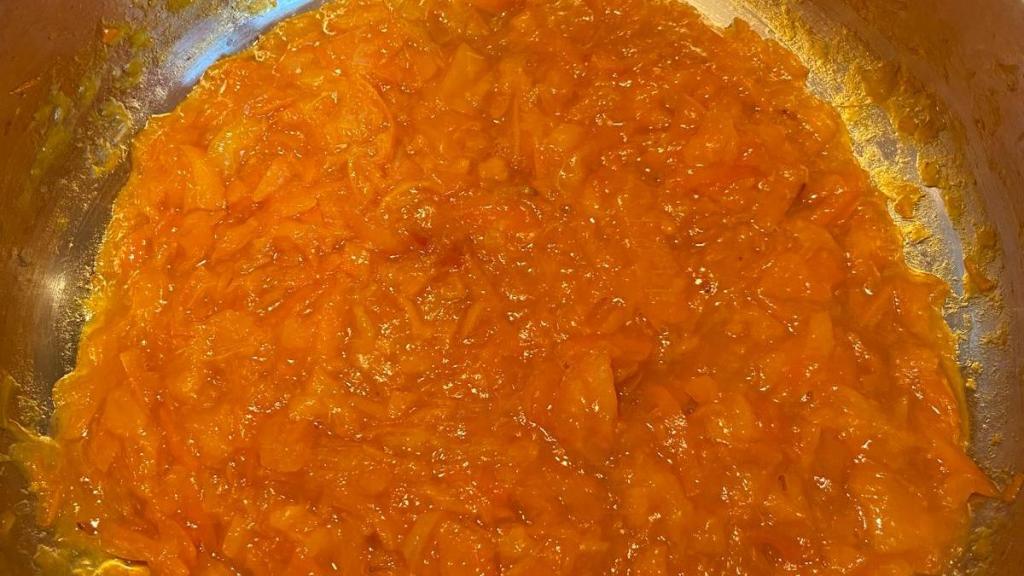
orange marmalade
Ingredients:
- Organic oranges (seville, navel, kumquat, or blood orange) | 4 medium size or about 20 kumquats
- honey | 2 Tbsp (more if truly needed)
- lemon juice | fresh juice of 1/2 lemon (optional, to taste)
directions:
Step 1: Prepare and Cook the Citrus
Boil whole organic citrus for ten minutes, remove to a cutting board. When cool enough to handle, slice into bits and remove any seeds. Return the fruit and juice to a cooking pot, simmer, covered, for about an hour. Add a bit of water if in danger of burning, or cook without lid if too wet.
Step 2: Adjust Sweetness
Taste the cooked citrus, then add the honey as needed, one measure at a time. If using kumquats, use even less honey. The sweetness of the honey is perfect when it warms the middle of the marmalade without making sweetness the first or main note.
Step 3: Serve and Store
Have warm on homemade rye crackers or good bread, or with full-fat living microbe yogurt. Store in the refrigerator in a sealed container for one or two weeks, if it lasts that long.
Welcoming Food Books
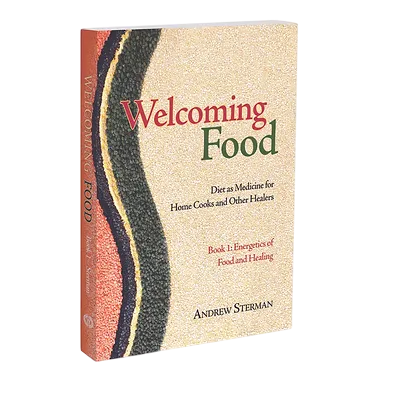
The two-volumes of Welcoming Food by Andrew Sterman explains Chinese medicine food energetics in clear, practical terms, with simple recipes and step-by-step guidance for using food to maintain or return to optimal health.

Enter your details below, and I’ll send you my latest recipes and writings, directly to your inbox.
Thank you!
You have successfully joined our subscriber list.
Share this:
- Share on Facebook (Opens in new window) Facebook
- Print (Opens in new window) Print
- Email a link to a friend (Opens in new window) Email
- Share on WhatsApp (Opens in new window) WhatsApp
- More
- Share on LinkedIn (Opens in new window) LinkedIn
- Share on Reddit (Opens in new window) Reddit
- Share on Tumblr (Opens in new window) Tumblr
- Share on Pinterest (Opens in new window) Pinterest
- Share on Telegram (Opens in new window) Telegram
- Share on Threads (Opens in new window) Threads
- Share on Mastodon (Opens in new window) Mastodon
- Share on Nextdoor (Opens in new window) Nextdoor
- Share on X (Opens in new window) X
- Share on Bluesky (Opens in new window) Bluesky